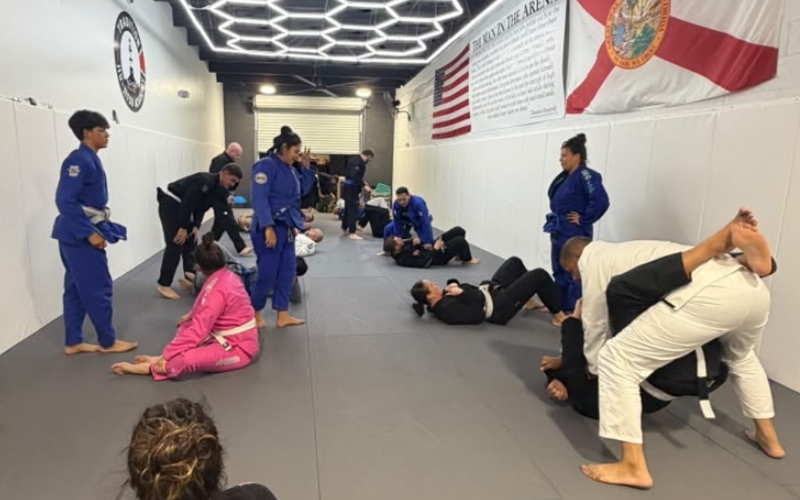
Walking into a Brazilian Jiu-Jitsu academy for the first time can feel intimidating. You might wonder whether you're in good enough shape, what you're supposed to wear, or if anyone else already knows what they're doing.
Maybe you've watched a few videos online and have a general idea of what Jiu-Jitsu looks like. Or perhaps you're starting from scratch and aren't entirely sure what happens during a class.
Either way, you're not alone.
At Tradition Jiu-Jitsu Academy in Port St. Lucie, we welcome adults with different backgrounds, fitness levels, and experience. Some students come to us because they want to learn self-defense. Others are looking for a new physical challenge, a way to stay active, or something they can enjoy outside their usual routine.
Whatever brings you through our doors, there's one thing we want you to understand: you don't need to know Jiu-Jitsu before you start learning Jiu-Jitsu.
Your first class is an introduction. It's an opportunity to meet our instructors, become familiar with the training environment, and begin understanding the fundamentals.
Here's what you can expect and how to prepare for your first experience on the mats.
Before Your First Class: Getting Started Is Easier Than You Think
One of the biggest misconceptions about Brazilian Jiu-Jitsu is that you need to get in shape before joining.
We hear variations of this concern from adults who haven't exercised regularly, people who have never practiced martial arts, and even former athletes who worry they won't be able to keep up.
The reality is that Jiu-Jitsu introduces movements and physical challenges that are different from many traditional workouts. Being strong, athletic, or experienced in another sport can certainly be helpful, but it doesn't mean you'll immediately understand how to move on the mats.
Everyone has to learn the fundamentals.
Our advice is simple: don't spend months waiting until you feel ready. Start by finding a class that matches your experience and current abilities.
At Tradition Jiu-Jitsu Academy, we offer several adult training options, including Gi, No-Gi, midday classes, and Women's Only Jiu-Jitsu. Not every session has the same structure, so we recommend contacting us before your first visit.
Let us know that you're new, ask which class would be appropriate, and confirm whether there's anything specific you should bring.
If you're returning to Jiu-Jitsu after a long break, that's worth mentioning too. Your previous experience may help you recognize techniques, but there's no reason to rush back into the intensity you remember.
The goal is to find a comfortable starting point and build from there.
What Should You Wear to Your First Jiu-Jitsu Class?
What you wear depends on the type of class you're attending.
Traditional Brazilian Jiu-Jitsu is often practiced in a Gi, which consists of a durable training jacket (Gi or Kimono), pants, and a belt. The uniform allows students to learn techniques that involve controlling an opponent's clothing, including grips, sweeps, and submissions.


No-Gi Jiu-Jitsu is practiced without the traditional uniform. Students generally wear fitted athletic clothing designed for grappling, such as a rash guard and appropriate shorts or training pants.


If you're attending your first class, don't rush out and purchase an expensive uniform before speaking with us. Ask what clothing is required and whether any introductory equipment arrangements are available.
Regardless of the class, a few basic preparation habits will make your visit easier.
What to Bring With You
- Clean training clothes appropriate for your scheduled class.
- A water bottle to stay hydrated.
- Sandals or other footwear for walking off the mats.
- A small towel and a change of clothes, if needed.
- A willingness to learn something new.
Personal hygiene is especially important in Jiu-Jitsu because students train in close contact with one another.
Keep your fingernails and toenails trimmed, remove jewelry before training, and avoid clothing with exposed zippers or hard accessories that could catch on a partner.
If you're sick or have a potentially contagious skin condition, wait until it's appropriate to return to training.
You don't need to show up with an entire gym bag full of specialized equipment. A little preparation and a quick conversation with our team are usually enough to get started.
What Happens During a Typical Jiu-Jitsu Class?
While the exact structure can vary depending on the instructor and class, most Brazilian Jiu-Jitsu sessions involve a combination of movement, technical instruction, and partner practice.
If you've never trained before, some of the terminology and movements may seem unfamiliar. That's completely normal.
Nobody expects you to understand everything on your first day.
Warm-Ups and Basic Movement
Many classes begin with movements that help students prepare for training.
Depending on the session, these may include mobility exercises, hip movements, controlled transitions from the ground to standing, or other drills related to Jiu-Jitsu techniques.
You might discover that moving across the mats feels different from running, lifting weights, or participating in traditional fitness classes.
That's because Jiu-Jitsu frequently involves changing levels, maintaining balance, shifting your weight, and using your entire body in coordinated movements.
As a beginner, focus on understanding what the instructor is demonstrating rather than trying to perform everything quickly.
If you don't understand a movement, ask.
And if you need to slow down or take a break, communicate with your instructor. Learning to move correctly is far more important than trying to match the pace of someone who has been training for years.
Learning Techniques With a Training Partner
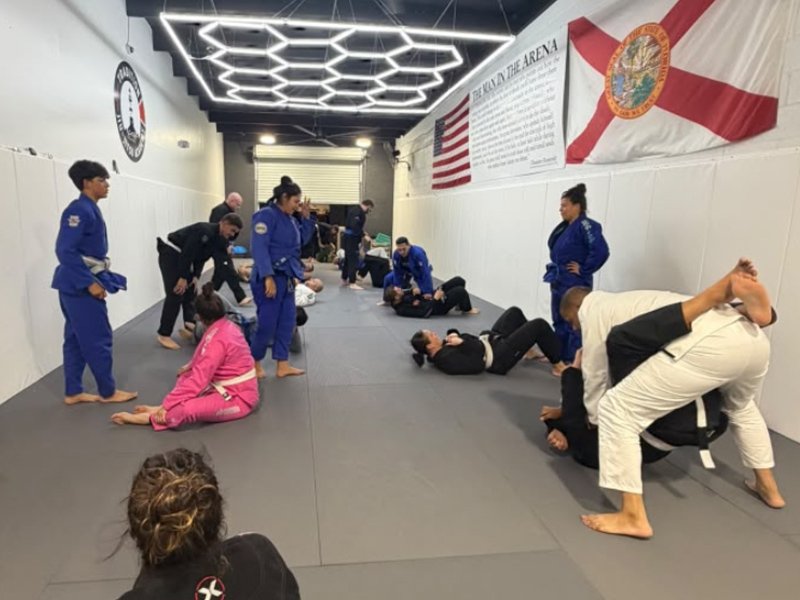
Technical instruction is a major part of Brazilian Jiu-Jitsu.
Your instructor may demonstrate a particular position, escape, sweep, or other technique before having students practice it with a partner.
This is commonly called drilling.
During drilling, the objective is to understand how a movement works and repeat it with appropriate cooperation. You're not trying to defeat your partner or prove that you're stronger.
For example, you might learn how to maintain a stable position, use your hips to create space, or escape from underneath someone.
At first, remembering where to place your hands, how to position your legs, and when to move can feel like a lot of information.
That's okay.
Even experienced students spend considerable time revisiting fundamental techniques. Repetition is how movements gradually become more familiar.
One of the things we encourage beginners to understand is that technique matters more than trying to force a movement with strength.
When something isn't working, slow down and ask your instructor what you might be missing.
Sometimes a small adjustment in positioning makes a significant difference.
Positional Training and Rolling
Depending on the class, you may also see students participating in positional training or live rolling.
Positional training involves practicing from a specific situation, such as escaping from underneath a partner or maintaining control from a particular position.
Rolling is the term commonly used for live Jiu-Jitsu training, where partners apply techniques while responding to one another's movements.
If you've watched Jiu-Jitsu videos online, rolling is probably what you've seen most often.
However, there's an important distinction between watching experienced students train and participating in your very first class.
You shouldn't assume that you need to jump into live rolling immediately.
Whether a beginner participates in positional practice, observes, or completes a modified exercise depends on the class and instructor's guidance.
Your first day isn't a competition.
It's an opportunity to understand the basics, become comfortable working with a partner, and begin developing the skills that will eventually make live training more productive.
Understanding Tapping: One of the First Things Every Beginner Should Learn
If there's one concept every new Jiu-Jitsu student should understand before partner training, it's tapping.
In Brazilian Jiu-Jitsu, tapping is a clear signal that you want the current exchange to stop.
Students commonly tap their partner or the mats, or communicate verbally when necessary. Your instructor can explain the appropriate signals and expectations before training begins.
You should never feel embarrassed about tapping.
In fact, learning when to tap is an important part of responsible training.
If you're caught in a submission, feel uncomfortable, become overwhelmed, or simply need to stop, communicate immediately. Likewise, when your training partner taps or tells you to stop, release and stop the technique right away.
There is no benefit to waiting until something hurts just to prove that you can tolerate it.
Jiu-Jitsu is a contact sport, and injuries are possible. Training responsibly means respecting your limits, communicating with partners, and following the instructor's guidance.
We want beginners to understand that tapping isn't a failure.
It's part of how students practice together, learn their limitations, and build trust with their training partners.
Jiu-Jitsu Etiquette: The Basics
Every martial arts academy has its own routines and expectations, but you don't need to memorize a long list of rules before attending your first class.
Most Jiu-Jitsu etiquette comes down to a few practical principles: respect your instructors, respect your training partners, maintain good hygiene, and approach each class with a willingness to learn.
Listen when techniques are being demonstrated. Follow the instructor's directions during drills, and avoid turning every exercise into a competition.
Keep your training clothing clean, wear appropriate footwear when walking off the mats, and remove your shoes before stepping onto the training surface.
When practicing with a partner, communicate clearly and be mindful of the difference in size, strength, and experience.
If you're unsure about something, ask rather than guessing.
You may also notice that students thank their training partners after drilling or rolling. It's a simple gesture, but it reflects something important about Brazilian Jiu-Jitsu.
Even when you're practicing competitive techniques, you're relying on another person to help you improve.
A good training partner is someone who makes the experience productive for both people.
For a more detailed explanation, read our Jiu-Jitsu etiquette guide.
What If You're Nervous or Feel Like You Can't Keep Up?
This is probably one of the most common concerns among adult beginners.
It's understandable.
Many adults spend their days working, raising families, and managing responsibilities they're already familiar with. Walking into an environment where you suddenly know very little can feel uncomfortable.
You may find yourself practicing alongside students who have trained for several years. Their movements look natural, they recognize positions immediately, and they seem to understand instructions without much explanation.
It's easy to compare yourself to them.
But that comparison isn't particularly useful.
Those students have already spent hundreds of hours learning things you're encountering for the first time.
They were beginners once, too.
Your job during your first class isn't to keep up with the most experienced person in the room. It's to pay attention, practice the techniques being taught, and become familiar with how training works.
You might forget half of what you learned by the time you get home. You might struggle with movements that seem simple when the instructor demonstrates them.
Neither means you're doing poorly.
One of the most valuable life lessons Jiu-Jitsu teaches is learning to become comfortable with the process of being a beginner.
Progress takes time, and everyone develops at a different pace.
The students who continue improving aren't necessarily the ones who understand everything immediately. They're the ones who remain willing to learn, ask questions, and keep practicing.
What Should You Do After Your First Class?
After training, take a few minutes to reflect on the experience.
You don't need to remember every technique or decide immediately whether you're going to become a lifelong Jiu-Jitsu practitioner.
Instead, think about what you learned and what questions you still have.
Maybe you enjoyed practicing with a partner but found the terminology confusing. Perhaps the warm-up felt challenging, or you discovered that your training clothes weren't ideal for the movements.
These are all useful things to recognize.
Ask your instructor about anything you didn't understand, including which class to attend next, what equipment you'll eventually need, and how often you should train as a beginner.
For many adults, consistency becomes easier when training fits realistically into their schedules.
Someone with a demanding job may prefer midday classes, while another student may find evening sessions more convenient. The important thing is choosing a routine you can maintain.
It's also worth remembering that you don't need to measure your potential based on one experience.
Jiu-Jitsu is a skill developed over time. Your first class is simply the beginning of that process.
If you enjoy the environment and want to continue, come back, practice what you've learned, and give yourself time to improve.
Frequently Asked Questions About Your First Class
Ready to Try Your First Jiu-Jitsu Class in Port St. Lucie?
Starting something unfamiliar can feel intimidating, but it doesn't have to be complicated.
You don't need previous martial arts experience, advanced flexibility, or years of athletic training to begin learning Brazilian Jiu-Jitsu.
You need a willingness to learn, an understanding that progress takes time, and an environment where you feel comfortable asking questions.
At Tradition Jiu-Jitsu Academy, we're proud to welcome beginners from Tradition, Port St. Lucie, and surrounding Treasure Coast communities.
Our adult programs provide opportunities to learn Jiu-Jitsu fundamentals, practice with training partners, and develop your skills at a pace appropriate for your experience.
Your first week is free, giving you an opportunity to meet our instructors, experience the academy, and see whether Jiu-Jitsu is right for you.
If you're thinking about starting, we'd love to hear from you.
Contact us before your visit, let us know you're a beginner, and we'll help you identify an appropriate class to get started.
Tradition Jiu-Jitsu Academy
11958 SW Tom Mackie Blvd, Unit 119
Port St. Lucie, FL 34987
Phone: (772) 775-2247
Contact: Request a Callback
We look forward to welcoming you onto the mats.


